
Big Five gemstone
Sapphire
Every colour but red, from Madagascar and East Africa
- From
- Madagascar · Tanzania
- Wear
- 9 · for everyday wear
- Gift
- September birthdays · 5th & 45th anniversaries
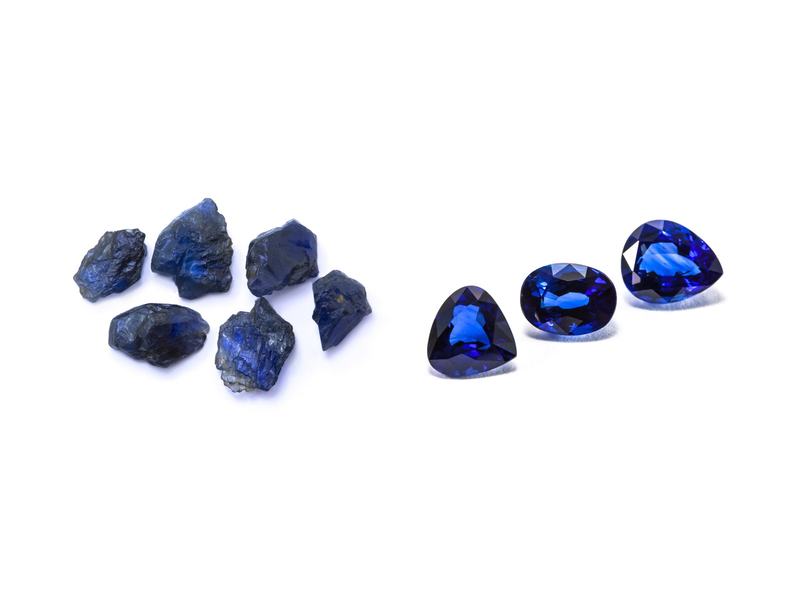
Sapphire is corundum, the same mineral as ruby. When it is red we call it ruby; every other colour is sapphire. The classic blue comes from tiny traces of iron and titanium, a few hundredths of a percent, inside a crystal that is otherwise colourless.
Sapphire is not mined in South Africa. Much of the world's finest today comes from elsewhere in Africa: from Madagascar, where a rush began at Ilakaka in 1998, and from Tanzania. We include it in our Big Five because it is one of the most loved stones in jewellery, and one of the hardest wearing.
Where the name comes from
The name goes back to the Greek sappheiros. In medieval Europe clergy wore blue sapphire as a symbol of heaven, and a 12-carat blue sapphire became one of the most famous engagement rings in the world, worn first by Diana, Princess of Wales, and now by Catherine, Princess of Wales.
Beliefs and legends
To the ancient Greeks and Romans, a blue sapphire protected the person who wore it. Later, ordinary people in Europe saw in it a sign of truth, sincerity and faithfulness — one reason sapphire has long been chosen for engagement rings.
The colours
- Blue: the most valued is a velvety, slightly violetish blue, neither too light nor too dark.
- Fancy sapphires: pink, yellow, orange, purple and green, each with its own price range.
- Padparadscha: a rare pinkish orange named after the lotus flower, and among the most valuable.
- Stars and colour change: some sapphires show a six-rayed star; a few change colour between daylight and lamplight.
Treatments, honestly
Most sapphires are heated to improve their colour and clarity. Heating is permanent and accepted throughout the trade. Some treatments go further: beryllium diffusion changes colour and is hard to detect, and some stones are filled with glass. Heating is standard practice and is not listed piece by piece; any other treatment we know of, we tell you before you buy.
How to judge a sapphire
- Colour first: strong, even colour, not so dark that it looks black at night.
- Clarity: sapphire is usually cleaner than ruby, but expect some fine inclusions.
- Cut: a well-cut stone shows colour evenly across its face, without a pale "window" in the centre.
- Size: most sapphires are under five carats; fine larger stones are rare.
Caring for your sapphire
Sapphire is 9 on the Mohs scale, with excellent toughness and no tendency to split, so it suits a ring worn every day. Clean it in warm soapy water with a soft brush. Ultrasonic cleaning is fine for an untreated or heated stone, but not for one that has been glass-filled; ask us which you have.
At a glance
| Mineral | Corundum (every colour except red) |
|---|---|
| Hardness | 9 Mohs; excellent toughness |
| Colours | Blue, pink, yellow, orange, purple, green; padparadscha |
| From | Madagascar (Ilakaka), Tanzania |
| Treatments | Most are heated (standard). Any other treatment disclosed |
| Care | Warm soapy water, soft brush |
See it in Knysna
See it in Knysna: both of our shops carry diamonds and tanzanite, and our workshop can set the stone you choose.