
Big Five gemstone
Ruby
The king of gems, and Africa's newest great source
- From
- Mozambique · Tanzania · Madagascar
- Wear
- 9 · for everyday wear
- Gift
- July birthdays · 15th & 40th anniversaries
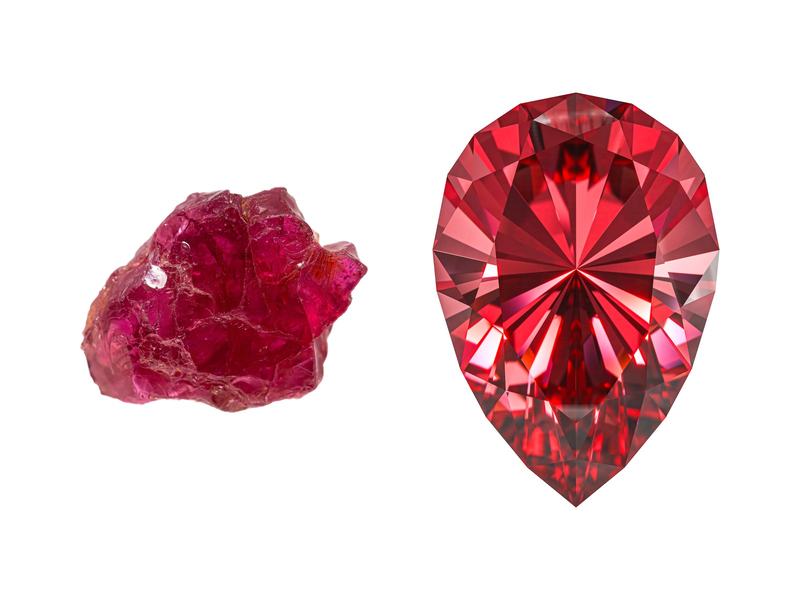
In Sanskrit, ruby was ratnaraj, the king of precious stones. It is red corundum, the same mineral as sapphire, coloured by chromium. The more chromium, the stronger the red, and the more the stone glows.
Ruby is not mined in South Africa, but the biggest change in the ruby world this century happened next door. In May 2009 rubies were found near Montepuez in northern Mozambique, and within a few years Mozambique had become the world's largest supplier. Rubies also come from Tanzania and Madagascar.
A record-breaking stone
Ruby holds the record for the highest price per carat ever paid for a coloured gemstone: in 2015 a 25.59-carat ruby sold for US$1,266,901 a carat.
Beliefs and legends
Ruby's red was once thought to come from a fire inside the stone, hot enough to boil water. Warriors in Burma believed rubies made them invincible in battle. In India, a ruby was said to let its owner live at peace with their enemies, and in medieval Europe it promised wealth, wisdom and success in love.
The colours
- Pure red to slightly purplish red is the most valued.
- Orangey or more purple reds are worth less.
- Too light, and the stone is called pink sapphire.
- "Pigeon's blood" is a trade name for the finest red, long tied to the reputation of particular mines.
Treatments, honestly
Many rubies are heated to improve their colour, which is permanent and accepted in the trade. Some rubies with many fractures are filled with lead glass, which makes them look much better but leaves them fragile, and they are worth less than heated rubies. Heating is standard practice and is not listed piece by piece; any other treatment we know of, we tell you before you buy.
How to judge a ruby
- Colour first: the purest, strongest red you can find, evenly spread.
- Clarity: rubies almost always have inclusions. Fine needles called "silk" can soften the colour beautifully; large inclusions near the surface lower the value.
- Cut: look for life across the whole face, without a pale "window" in the centre.
- Size: fine rubies over a carat are rare, and the price climbs steeply with size.
Caring for your ruby
Ruby is 9 on the Mohs scale, with excellent toughness and no tendency to split: it suits a ring worn every day. Clean it in warm soapy water with a soft brush. A glass-filled ruby needs gentler care: a damp cloth only, and nothing acidic, not even lemon juice.
At a glance
| Mineral | Corundum, red variety |
|---|---|
| Hardness | 9 Mohs; tough, no cleavage |
| Colour | Pure red to slightly purplish red |
| From | Mozambique (Montepuez), Tanzania, Madagascar |
| Treatments | Many are heated (standard). Any other treatment disclosed |
| Care | Warm soapy water; glass-filled stones only a damp cloth |
See it in Knysna
See it in Knysna: both of our shops carry diamonds and tanzanite, and our workshop can set the stone you choose.