
Laboratory-made gem
Moissanite
First found in a meteorite, now grown in a laboratory
- From
- Grown in a laboratory · first found in a meteorite
- Wear
- 9.25 · the hardest gem after diamond
- Chosen for
- Engagement rings · everyday rings · a bigger look for less
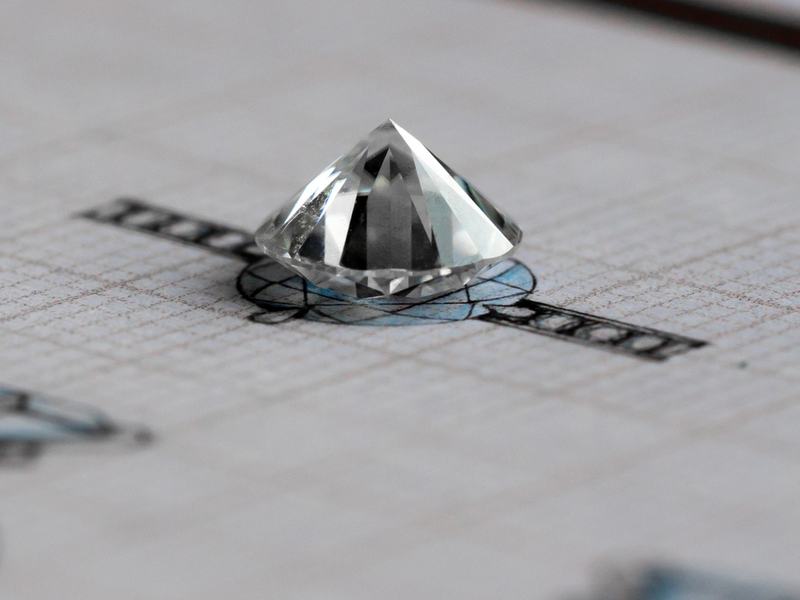
Moissanite's story begins with a meteorite. The French chemist Henri Moissan found tiny crystals of a new mineral in the Canyon Diablo meteorite, and in 1905 it was named moissanite in his honour. In nature it occurs only in minute amounts, so every moissanite in jewellery has been grown in a laboratory.
Moissanite is not a diamond, and we will never sell it as one. It is a gem in its own right: harder than every natural gem except diamond, and with more fire.
What it is
Moissanite is silicon carbide. It is grown as crystals in a laboratory, then cut and polished like any other gem. Colourless moissanite has been made for jewellery since the late 1990s. At 9.25 on the Mohs scale it is second only to diamond, and it is very tough, which makes it a good choice for a ring you will wear every day.
Moissanite and diamond, side by side
- Fire: moissanite splits light into colour more than twice as strongly as diamond does, so in sunlight it shows more rainbow flashes.
- Sparkle: it bends light more strongly than diamond.
- Hardness: diamond is 10, moissanite 9.25; both are hard enough for daily wear.
- Weight: moissanite is lighter, so a moissanite weighs less than a diamond of the same size.
- Price: moissanite costs a fraction of the price of a diamond of the same size.
- Under a loupe: moissanite is doubly refractive, so the facet edges at the back of the stone look doubled. A diamond's do not.
Honesty
Many simple diamond testers work by measuring how fast a stone conducts heat, and they read moissanite as diamond. That is exactly why we name every stone. When you buy moissanite from us, your invoice says moissanite, and we will never describe it as a diamond or as a natural stone.
Our moissanite
We sell colourless moissanite, in finished pieces or chosen by you and made to order in our Knysna workshop. Ask to see a moissanite and a diamond side by side, ideally in daylight: the difference in fire is easiest to see there.
Caring for your moissanite
Clean it in warm water with a little washing-up liquid and a soft brush; grease dulls any stone. Store pieces apart: moissanite can scratch softer gems, and diamond can scratch moissanite. Have the claws checked once a year.
At a glance
| What it is | Silicon carbide, grown in a laboratory |
|---|---|
| Hardness | 9.25 Mohs |
| Fire | More than twice that of diamond |
| Colour | Colourless (the only colour we sell) |
| Natural? | No. Natural moissanite exists only in tiny amounts |
| Care | Warm soapy water, soft brush. Store apart from other jewellery |
See it in Knysna
See it in Knysna: both of our shops carry diamonds and tanzanite, and our workshop can set the stone you choose.