
African gemstone
Aquamarine
The colour of the sea, from across Africa
- From
- Namibia · Mozambique · Madagascar · Nigeria
- Wear
- 7.5 – 8 · for everyday wear
- Gift
- March birthdays · 19th anniversary
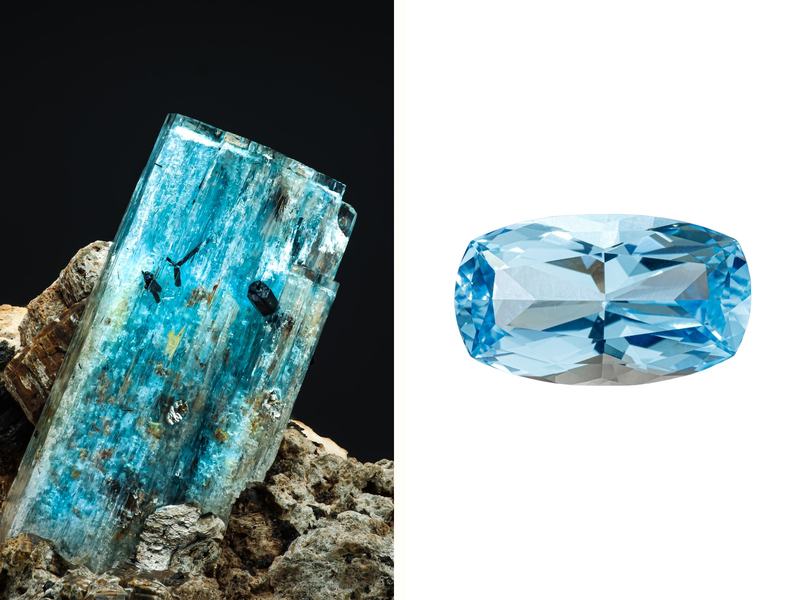
Stand at the Knysna Heads on a clear morning and look at the water just beyond the rocks: that pale, clean blue-green is the colour of aquamarine. Its name means "sea water", and old sailors claimed it would calm the waves and keep them safe at sea.
Aquamarine is not a South African gem, but our neighbour Namibia is known for it. In the Erongo Mountains, a ring of granite some 35 kilometres across on the edge of the Namib Desert, it grows as clear blue-green crystals with sharp faces, some with fine needles of black tourmaline inside. It is also mined in Mozambique, Madagascar, Nigeria, Zambia and Kenya.
Beliefs and legends
Sailors' tales called aquamarine the treasure of mermaids. It was also given as a wish for a happy marriage, and, like all beryl, it was once carried for courage in battle and in court.
What it is
Aquamarine is the green-blue to blue variety of beryl, the same mineral as emerald. Its colour is usually a light, pastel greenish blue. Its crystals tend to grow large, clean and well formed, so even a big aquamarine can be clear right through.
Treatments, honestly
Most aquamarine is gently heated, which takes out the green and leaves a purer blue. The change is stable and standard throughout the trade, so it is not listed piece by piece; any other treatment we know of, we tell you.
How to judge an aquamarine
- Colour sets the price. The purer and more intense the blue, the more valuable the stone; paler and greener stones cost less.
- Expect it to be clean. Good aquamarine is usually clear to the eye.
Caring for your aquamarine
Aquamarine is 7.5 to 8 on the Mohs scale, durable enough for everyday wear. Clean it in warm water with a mild washing-up liquid and a soft brush, scrubbing behind the stone where dirt collects. Ultrasonic and steam cleaning are usually safe, unless the stone has fractures or liquid inclusions.
At a glance
| Mineral | Beryl, blue variety |
|---|---|
| Hardness | 7.5 – 8 Mohs |
| Colours | Pale greenish blue to blue; purer blue is rarer |
| From | Namibia (Erongo); Mozambique, Madagascar, Nigeria, Zambia, Kenya |
| Treatments | Most are heated (standard, stable) |
| Care | Warm soapy water, soft brush |
See it in Knysna
See it in Knysna: both of our shops carry diamonds and tanzanite, and our workshop can set the stone you choose.